
The 2026 2nd International Conference on Navigation, Detection and Control (CNDC 2026) Concludes Successfully!
On the morning of August 8, 2026, the 2nd International Conference on Navigation, Detection and Control (CNDC 2026) was grandly held and successfully concluded in the lecture hall of No.2 Engineering Building (Higher Education Mega Center Campus), Guangdong University of Technology. Hosted by Guangdong University of Technology, the Joint International Research Laboratory of Intelligent Information Processing and System Integration of the Ministry of Education, and Guangdong Key Laboratory of Intelligent Systems and Optimization Integration, this conference gathered distinguished experts, scholars and young research backbones from well‑known domestic universities and research institutes. In‑depth academic exchanges were carried out on cutting‑edge fields including intelligent navigation systems, unmanned driving technologies, advanced control theories, sensor fusion, as well as their applications in aerospace, transportation and national defense. Frontier innovative achievements were shared, offering brand‑new insights for industrial technology iteration and interdisciplinary collaborative innovation.
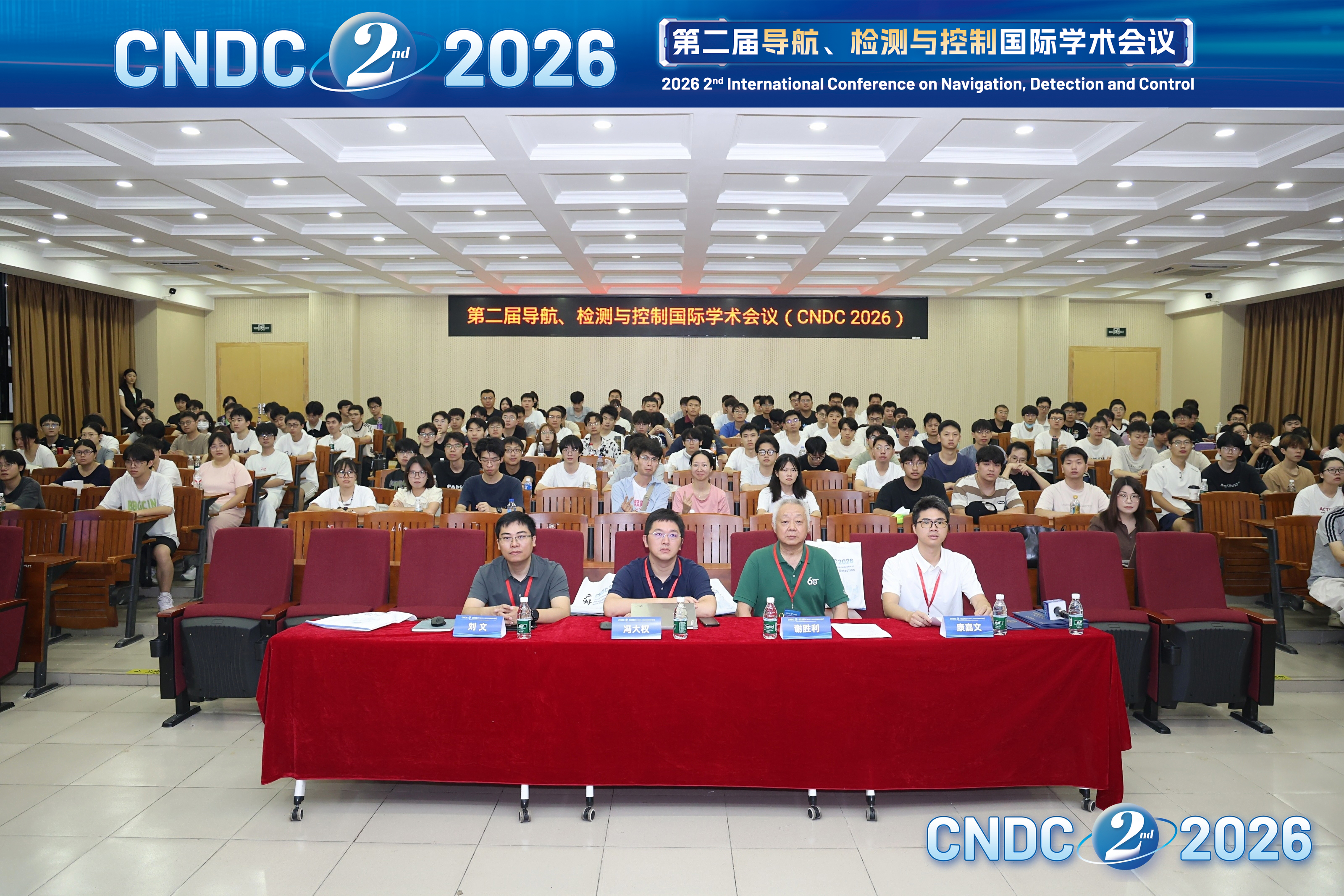
(Group Photo)
The conference was presided over by Professor Kang Jiawen from Guangdong University of Technology. At the opening ceremony, Professor Xie Shengli (IEEE Fellow, Winner of the National Science Fund for Distinguished Young Scholars, Foreign Member of Russian Academy of Engineering) delivered the opening address. Professor Xie extended a warm welcome to all attending guests, introduced distinguished keynote speakers present at the conference, elaborated on Guangdong University of Technology’s school‑running characteristics featuring engineering priority and multi‑disciplinary coordinated development. He highlighted the university’s top‑tier disciplinary strengths and research platform advantages in Control Science and Engineering (Discipline Rank A‑), intelligent navigation and multi‑sensor fusion detection. He also clarified the core mission of this conference to build a global academic exchange platform and foster a rigorous, open, inclusive academic atmosphere for mutual learning.
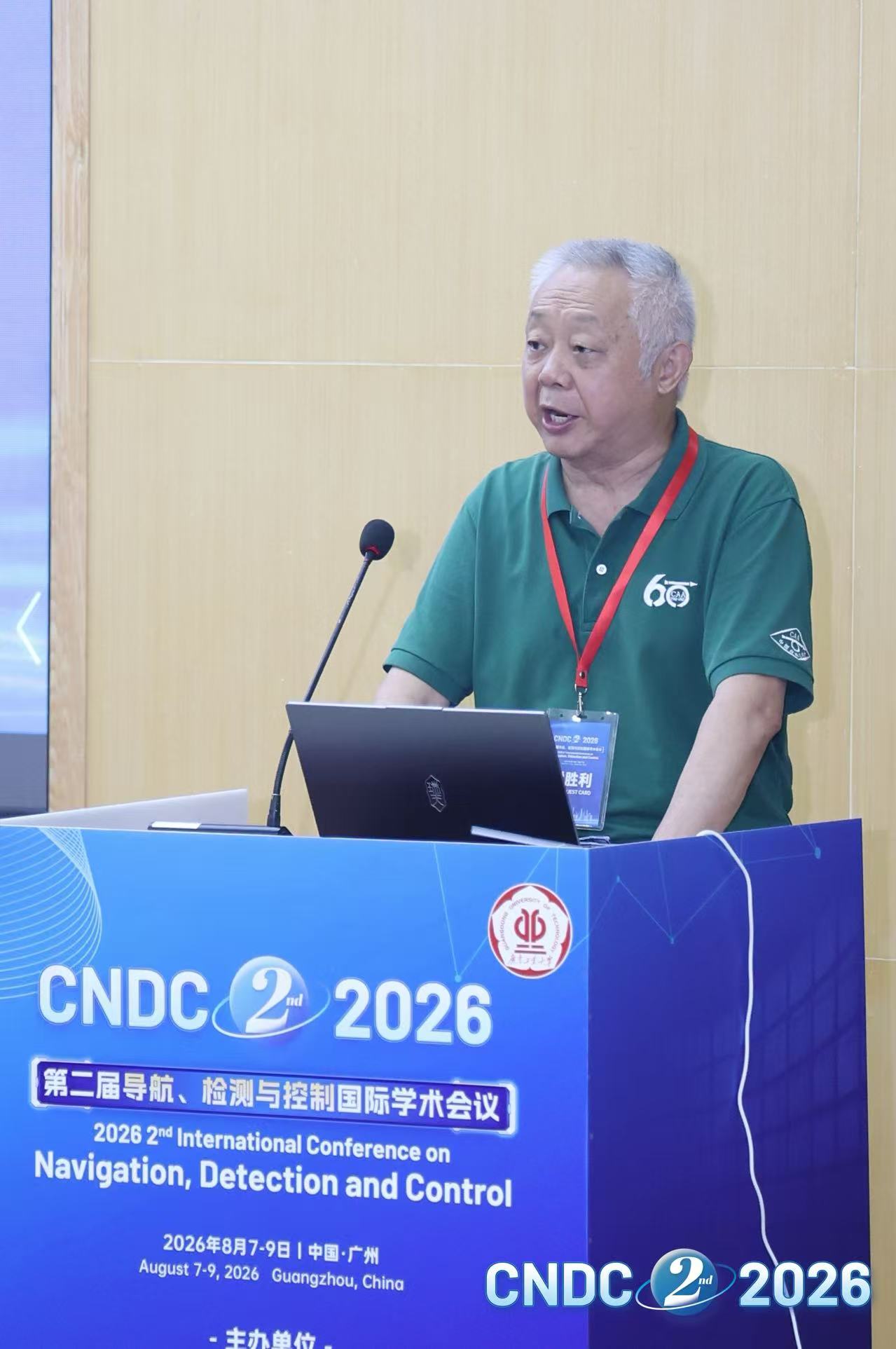
(Opening Address: Professor Xie Shengli)
Four authoritative experts were invited to deliver keynote speeches, covering core research tracks including lunar Beidou satellite navigation, autonomous research of LLM‑based intelligent agents, robust video transmission, and intelligent ship navigation. Each speech possessed great practical engineering value together with cutting‑edge theoretical innovations. Q&A sessions were arranged after every presentation. Experts and participating scholars engaged in full interactions and discussions to spark academic ideas, which fully demonstrated the international and high‑level academic influence of the conference.
The first keynote speaker was Professor Xie Shengli from Guangdong University of Technology, with the speech titledNew AI‑empowered Technologies for Lunar Beidou Satellite Navigation and Positioning. Based on the Queqiao system, Professor Xie discussed the construction of the Beidou lunar communication‑navigation system. He presented research outcomes achieved in collaboration with the National Key Laboratory of Deep‑Space Exploration and the 5th Research Institute of China Aerospace Science and Technology Corporation, including lunar‑orbit satellite orbit prediction, lunar‑orbit satellite positioning, satellite‑ground coordinated positioning and lunar‑surface base‑station positioning. Comparative results against counterparts from NASA (USA), ESA (Europe) and JAXA (Japan) were also provided. After the report, scholars actively raised questions and held thorough exchanges on key technologies of lunar navigation and positioning.
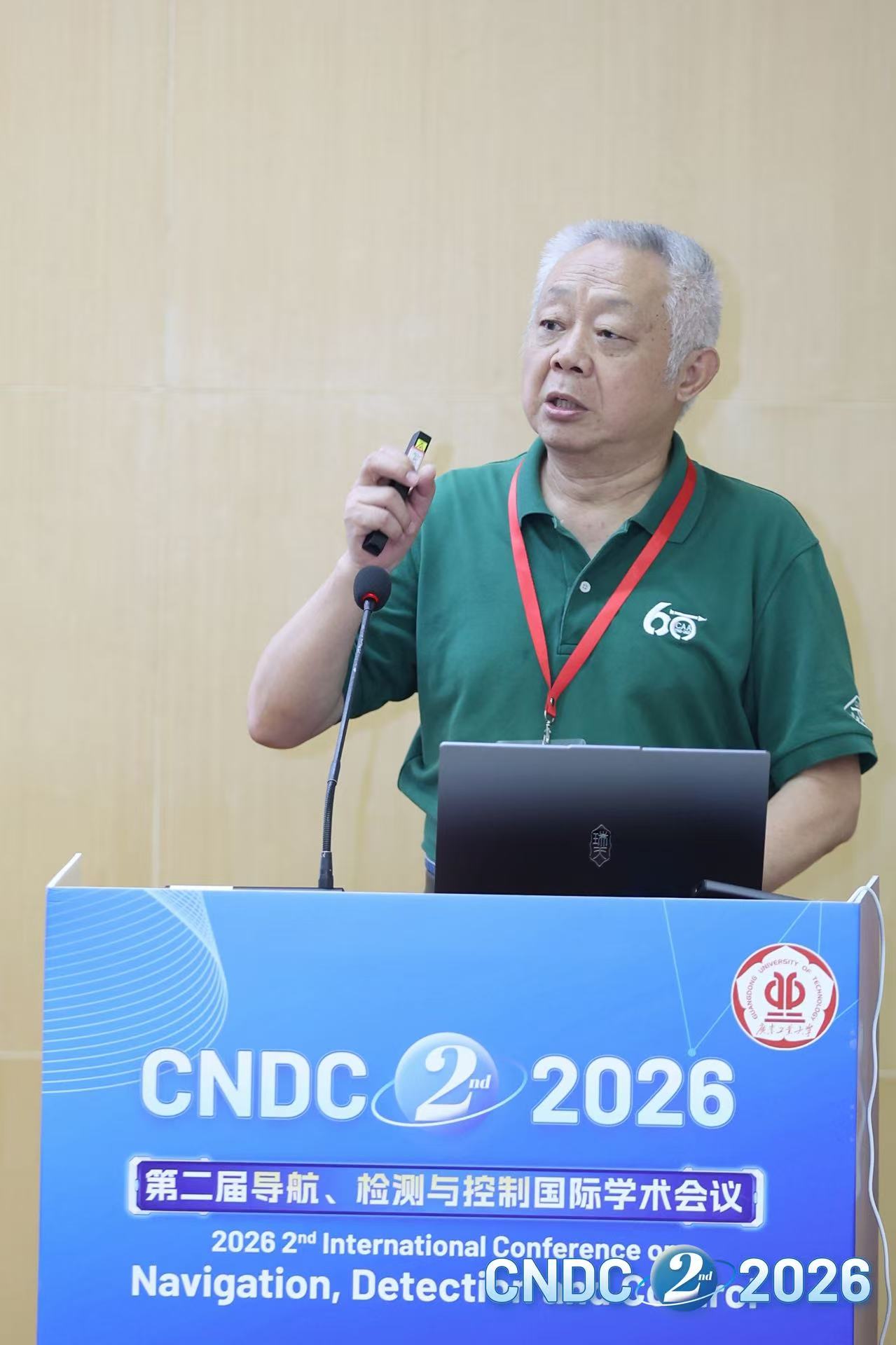
(Keynote Report 1: Professor Xie Shengli)
The second keynote speaker was Professor Xu Jie from The Chinese University of Hong Kong, Shenzhen (IEEE Fellow, Clarivate Highly Cited Researcher, Distinguished Lecturer of IEEE Communications Society, current Chair of IEEE Technical Committee on Wireless Communications). His presentation was titledClosed‑loop LLM‑Agent‑based Automated Wireless Optimization Research. Professor Xu introduced WARA (Wireless Autonomous Research Agent), an end‑to‑end framework for automated wireless optimization research. Given only an initial research direction as input, WARA can autonomously complete the whole research workflow: research gap mining, problem formulation, algorithm design, simulation experiments and academic manuscript generation. It realizes the transformation from research ideas to complete technical results supported by solid experiments, triggering heated discussions among participants from the cross‑field of artificial intelligence and wireless communications.
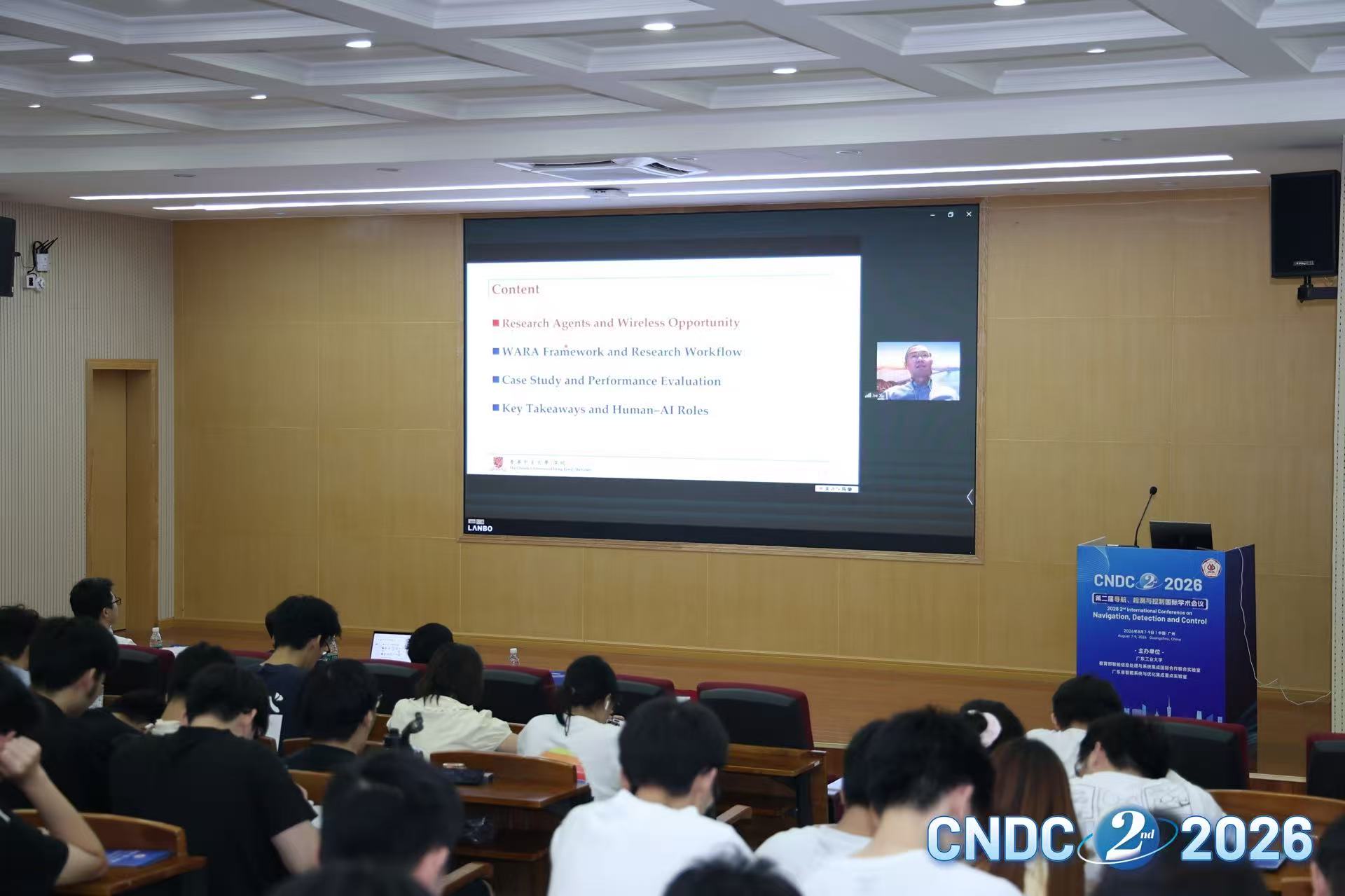
(Keynote Report 2: Professor Xu Jie)
The third keynote speaker was Professor Feng Daquan from Shenzhen University (Winner of National Science Fund for Excellent Young Scholars, consecutively listed among Elsevier’s China Highly Cited Researchers from 2021 to 2026, Principal Winner of the 2023 Natural Science First Prize awarded by China Institute of Electronics). His report was entitledRobust Video Transmission Methods for Weak‑Network Environments. Professor Feng is a tenured professor and PhD supervisor in Academician Ding Wenhua’s Digital Creative Team at Shenzhen University. He also serves as Deputy Secretary‑General of China Innovation Design Industry Strategic Alliance, Vice‑Chairman of Immersive Communications Committee of China Communications Society, and Director of the doctoral and master’s degree program for Next‑Generation Electronic Information Technology at Shenzhen University. Aiming at problems including bit‑rate mismatch, error propagation and playback stalling caused by rapid bandwidth fluctuation, wireless noise and burst packet loss in wireless video transmission, Professor Feng proposed two categories of end‑to‑end robust video transmission approaches. The first approach maps video frames into compact discrete feature indices. The sender selectively transmits indices according to real‑time bandwidth; the receiver leverages spatio‑temporal visual Transformer to fuse information from historical and current frames to predict missing indices, effectively suppressing error propagation under low signal‑to‑noise ratio. The second approach targets continuous latent features, adopting a dual‑function spatio‑temporal Transformer with shared backbone to perform probability distribution estimation and missing feature recovery simultaneously. It outperforms H.265+FEC and state‑of‑the‑art robust neural video coding schemes under severe burst packet loss, and maintains satisfactory reconstruction quality even under an extreme packet‑loss rate of 90%.
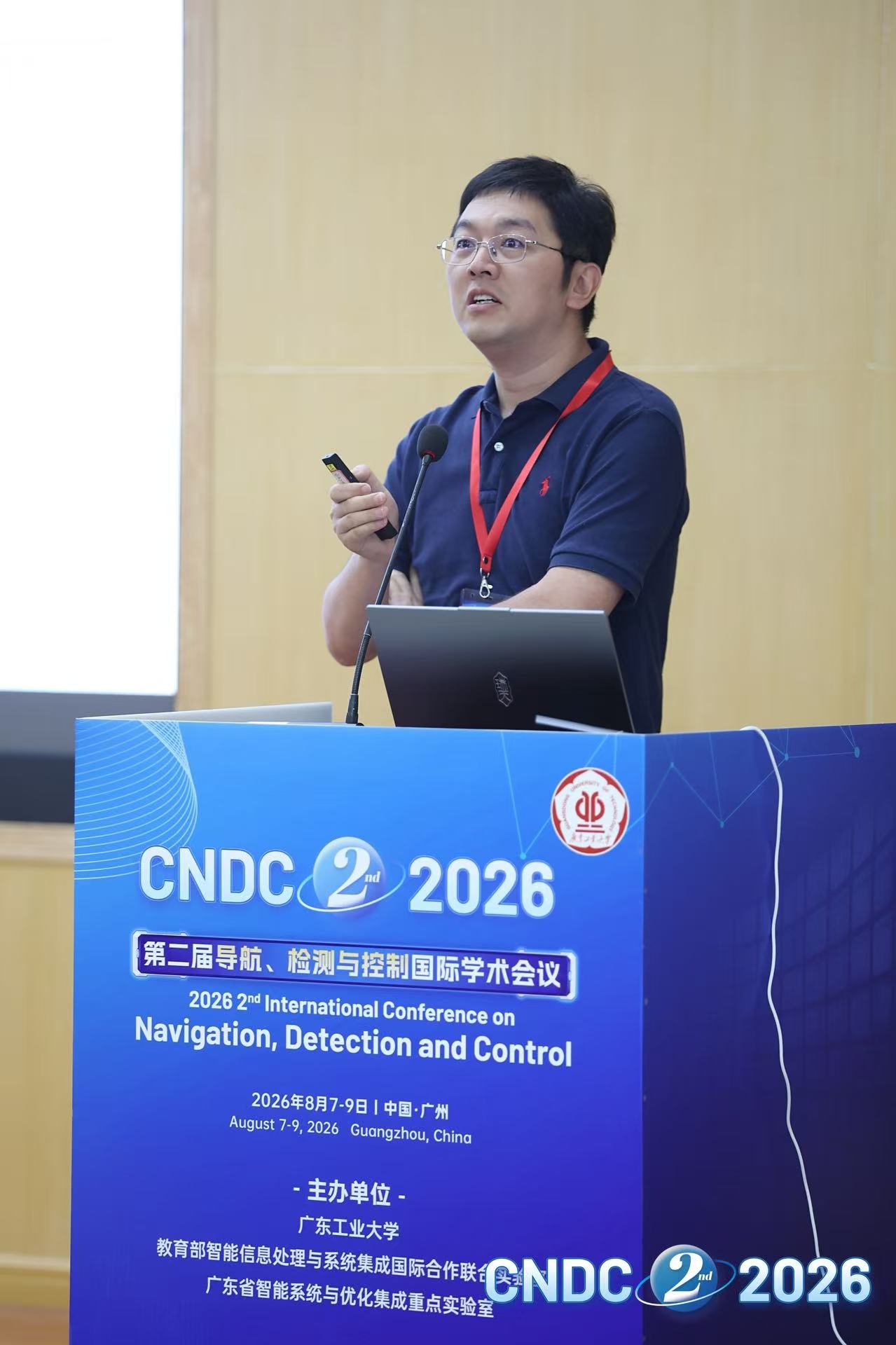
(Keynote Report 3: Professor Feng Daquan)
The fourth keynote speaker was Professor Liu Wen from Wuhan University of Technology (National High‑Level Young Talent, Winner of Youth Science and Technology Award from China Intelligent Transportation Association), delivering a speech namedMulti‑sensor Data Fusion for Intelligent Ship Navigation. Given that the safety of intelligent ships heavily relies on accurate and real‑time perception of navigation environment via ship‑borne sensors, Professor Liu focused on presenting the latest research achievements of his research group in data fusion of vision‑AIS, high‑dimensional imaging radar‑vision, and navigation radar‑vision‑AIS. These results support auxiliary and autonomous ship navigation under all‑weather complex conditions. After the report, many teachers and students specializing in transportation and maritime studies conducted in‑depth communications with the expert.
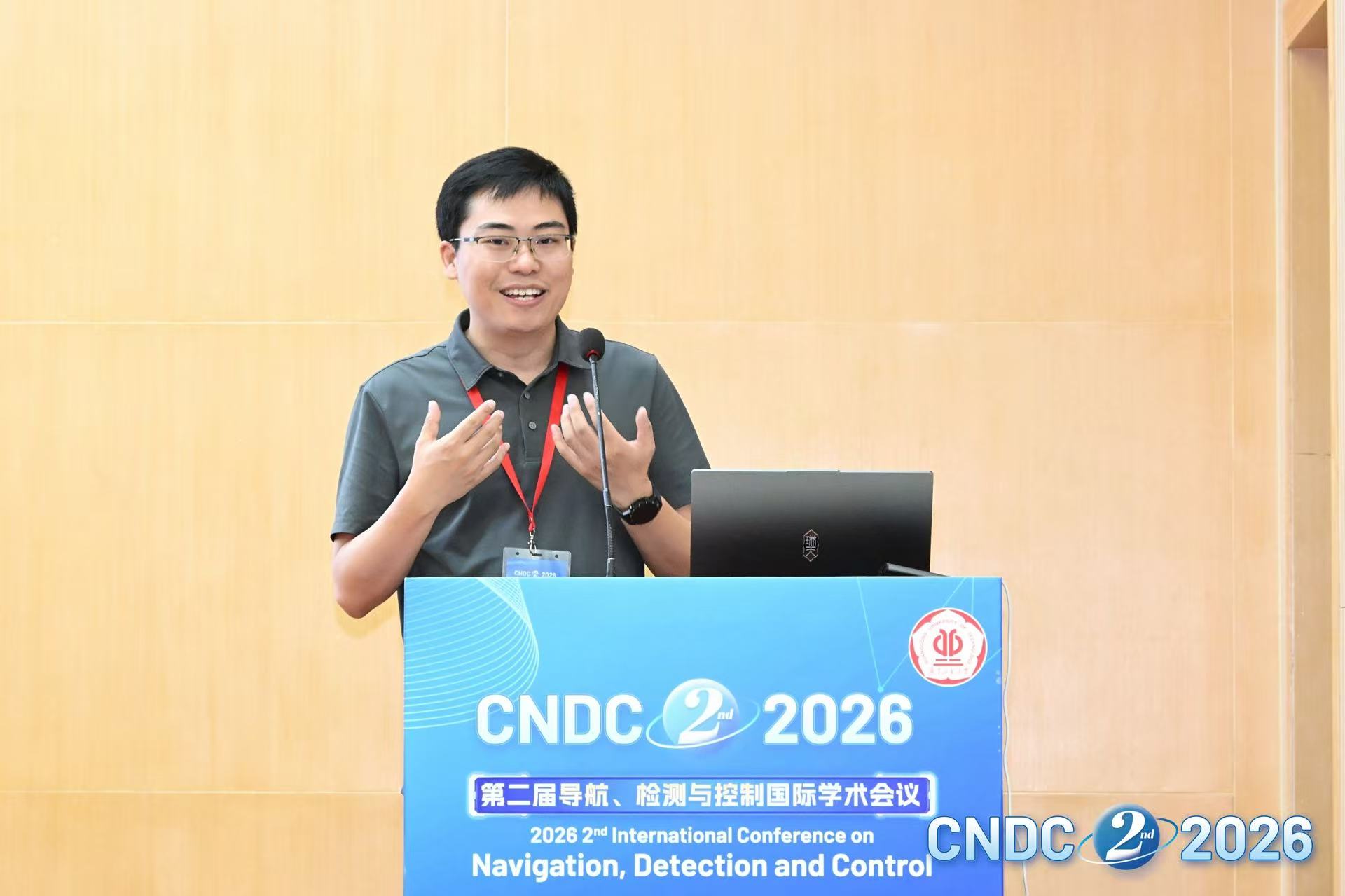
(Keynote Report 4: Professor Liu Wen)
In addition, oral presentation and poster demonstration sessions were arranged in this conference. Four young research backbones delivered 10‑minute thematic oral presentations respectively. Their research covered cutting‑edge sub‑fields such as Hall‑effect thruster fault diagnosis, underwater target detection, GNSS satellite selection for urban environments, and multi‑agent cooperative guidance and control. These presentations balanced fundamental algorithm innovation, prototype experimental verification and engineering applications, spanning aerospace, ocean engineering, intelligent transportation, national defense equipment and other sectors. They provided abundant referable research ideas for participants and promoted knowledge exchange and technology sharing among universities, enterprises and diverse industries.
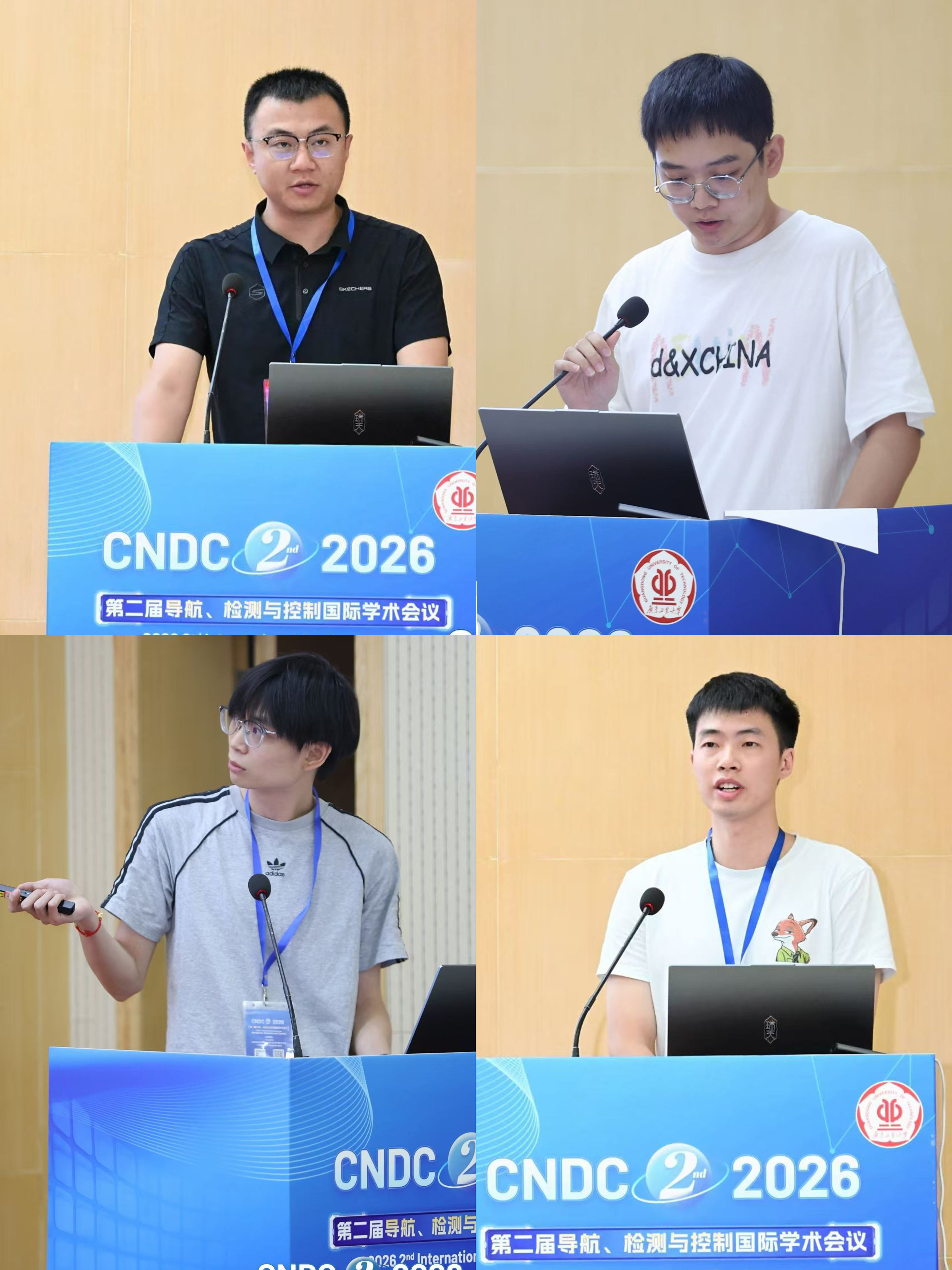
(Oral Presentations)
During the poster demonstration session, eight scholars showcased their research work. The topics covered feed‑forward control for photoelectric tracking, motion compensation for ship‑gangway systems, ionospheric model accuracy improvement, satellite clock bias prediction, LiDAR SLAM, satellite navigation signal enhancement, height estimation for indoor‑outdoor transition, and data quality analysis for GNSS continuously operating reference stations. Diversified innovative outcomes within navigation, detection and control domains were fully displayed.
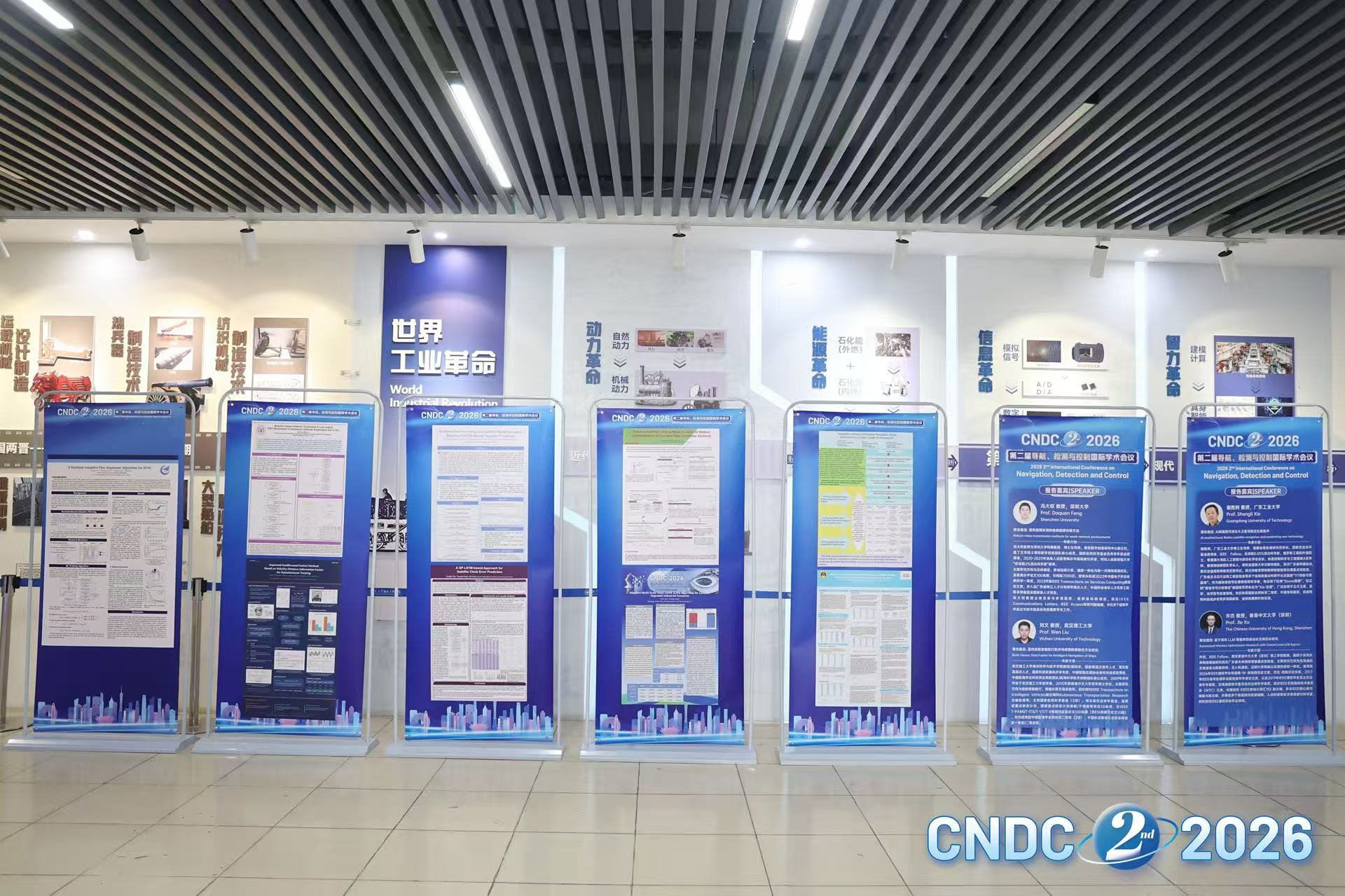
(Poster Exhibition)
Thus, the 2026 2nd International Conference on Navigation, Detection and Control (CNDC 2026) drew to a successful close. Upholding innovation and building upon past achievements, the conference will keep focusing on frontier areas of intelligent navigation, advanced detection and autonomous control. It addresses critical technical challenges encountered by scientific research and industries, helps enhance China’s global competitiveness in navigation and automatic control technologies, and continuously advances cross‑university, cross‑industry and cross‑border collaborative innovation as well as cultivation of young talents. Looking forward to meeting everyone at the next conference to jointly explore new development opportunities for the industry!